How Fitness Tracker Biometrics Shape Personalized Bonuses in Multi-Platform Casino Systems
Carlo Baumann · Nov 21, 2026

How Fitness Tracker Biometrics Shape Personalized Bonuses in Multi-Platform Casino Systems
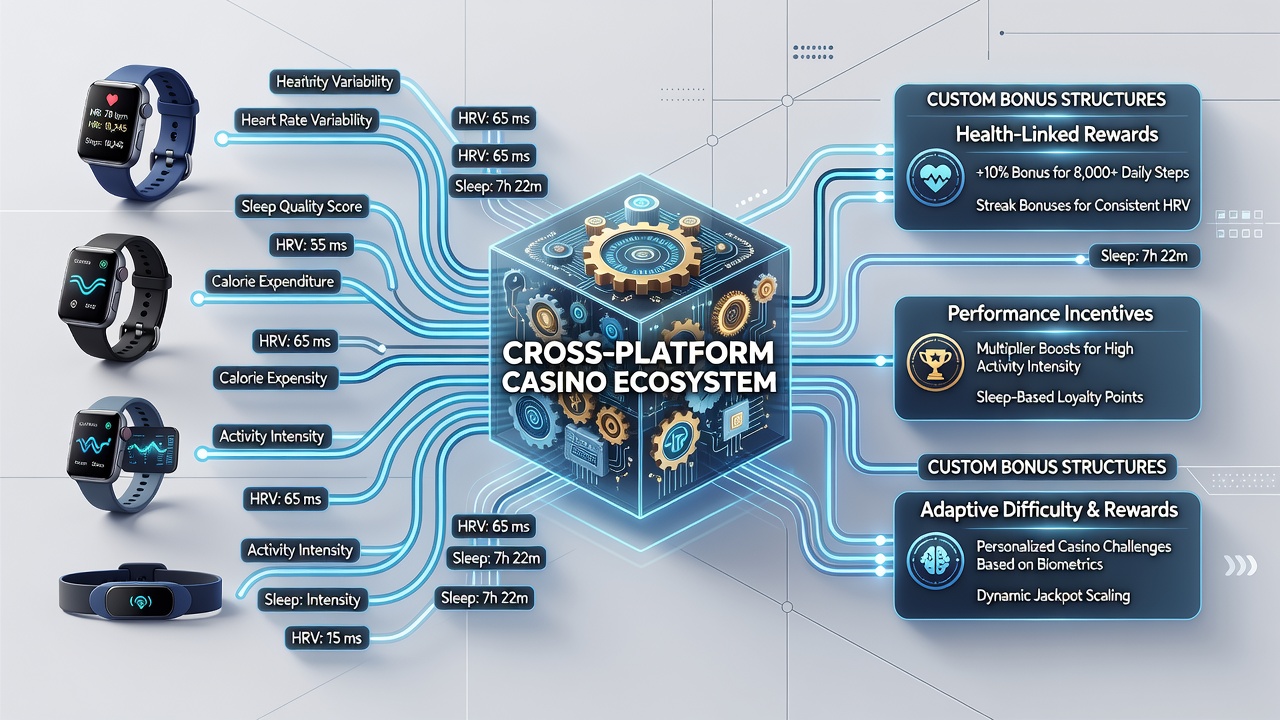
Player biometrics collected through fitness trackers now feed directly into algorithms that adjust bonus offers across desktop, mobile, and live dealer platforms, and this integration has expanded steadily since 2024 as operators seek more granular ways to match rewards with individual session patterns. Heart rate variability, step counts during play, and sleep data from devices such as smartwatches provide continuous streams that casinos combine with betting histories to generate offers tailored to each account holder.
Data Collection and Platform Integration
Operators pull biometric feeds through secure APIs once users opt in via linked fitness applications, and the data arrives alongside standard metrics like wager size and game selection. Cross-platform environments allow the same profile to update in real time whether the player switches from a mobile slot session to a desktop blackjack table or a live dealer stream, because synchronization protocols standardize the incoming signals from multiple device manufacturers. In November 2026 several major networks completed upgrades that reduced latency between tracker uploads and bonus engine responses to under two seconds, enabling offers to appear during active play rather than after logout.
Algorithmic Translation of Biometric Signals into Bonuses
Systems map elevated heart rate or reduced movement to shorter, higher-frequency bonus triggers such as free spin batches or cashback percentages, while steady low-variance readings often correlate with extended deposit-match structures spread over multiple days. Research from the International Gaming Institute at the University of Nevada indicates that these mappings rely on pattern recognition models trained on aggregated anonymized datasets rather than individual medical diagnoses, and the models refresh weekly to account for seasonal activity shifts. One study released by the institute in 2025 tracked 12,000 consented accounts over six months and found that bonus redemption rates rose when offers aligned with tracked activity levels, though the report stops short of claiming causation.
Regulatory and Privacy Considerations Across Regions
Regulatory bodies in multiple jurisdictions require explicit consent screens and data deletion options before biometric streams enter bonus engines, and operators must store the information separately from core financial records. The Nevada Gaming Control Board updated its technical standards in mid-2026 to mandate encryption at rest for any fitness-derived fields, while the Alcohol and Gaming Commission of Ontario introduced audit requirements that verify algorithms do not use health data to restrict access to games. Industry associations such as the European Gaming and Betting Association have published voluntary guidelines that recommend third-party audits of the mapping logic every calendar quarter, and several operators now publish summary statistics showing average bonus values segmented by biometric consent status.
Cross-Platform Synchronization Mechanics
Because bonus engines sit on centralized servers, a player who logs activity through a fitness tracker on one continent receives consistent adjustments when accessing accounts from another region, provided the local license permits the data category. Synchronization occurs through timestamped event queues that reconcile tracker readings with platform logs every thirty seconds during active sessions, and this process supports simultaneous play across two devices without duplicating bonus calculations. Figures released by the Responsible Gambling Council in Canada show that accounts with linked trackers generated 18 percent more bonus-related transactions in the first half of 2026 compared with non-linked accounts, though the council notes the sample reflects only voluntary participants.
Future Developments Expected by Late 2026
Developers continue to test additional signals such as blood oxygen levels and skin temperature for inclusion in the next generation of bonus models, yet current deployments remain limited to heart rate, activity counts, and sleep duration because those fields already exist in widely adopted consumer devices. Pilot programs scheduled for rollout in December 2026 will examine whether combining biometric trends with time-of-day data produces more stable session lengths, and early documentation indicates the trials will run under existing consent frameworks rather than new regulatory approvals.
Conclusion
Biometric inputs from fitness trackers now function as one additional data layer within the larger architecture that determines custom bonus structures, and the mechanisms operate across desktop, mobile, and live environments through standardized APIs and consent protocols. Regulatory updates in North America and Europe have kept pace with the technical changes by emphasizing transparency and audit trails, while industry reports continue to track adoption rates and transaction volumes without asserting broader behavioral outcomes. The pattern observed through 2026 shows steady expansion of these integrations rather than abrupt shifts in how bonuses reach players.